
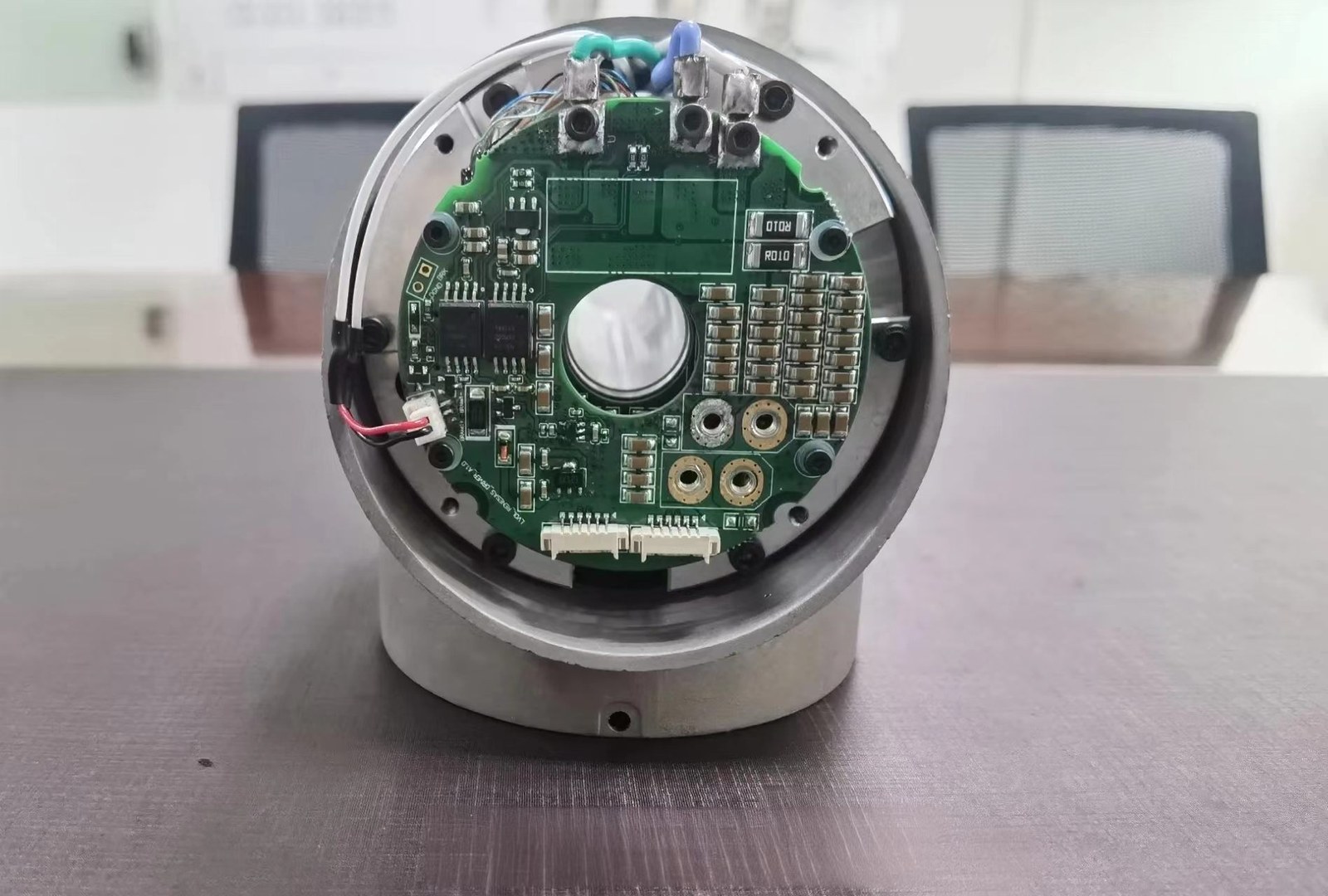
RM10 Rotary Encoder
absolute inductive angle feedback for demanding rotary motion — 0.001° accuracy, 10,000 RPM, and immunity to the contamination that kills optical encoders.
Absolute angle. Zero compromises.
The RM10 uses the self-developed AFEA1001 sensing SoC to measure absolute angle through planar coil coupling. With absolute output — position retained on power loss, no homing required — it replaces optical and magnetic encoders in servo motors, robot joints, spindles and rotary stages, while surviving oil, dust, moisture and vibration.
- absolute inductive, single-turn & multi-turn options
- 0.001° absolute accuracy
- Up to 10,000 RPM with 16 kHz communication
- Drop-in RS485 (Tamagawa protocol), BISS-C and SSI
- Ultra-low power: Sleep < 25 µA, Deep Sleep < 2 µA
- IP67 with optional conformal coating for harsh environments
Try the RM10 sensing principle
Grab the encoder disc and rotate it — watch absolute angle update in real time.
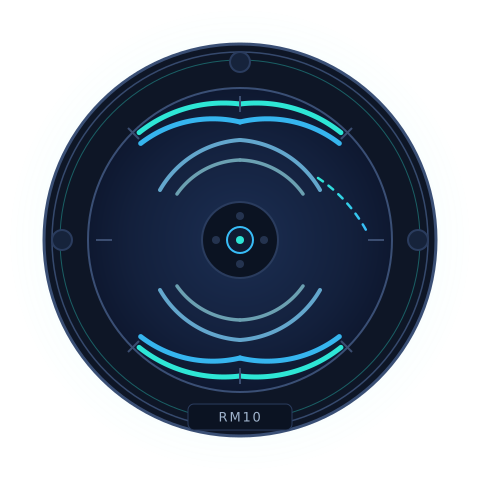
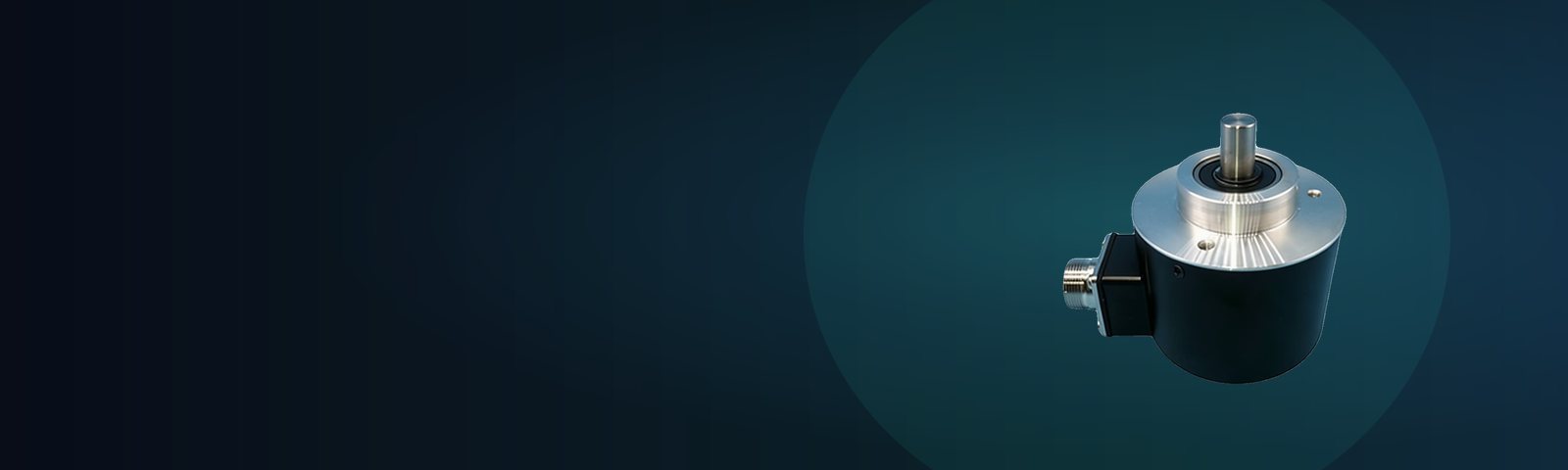
One encoder, four mounting options
Every variant below is the same RM10 inductive encoder — choose the shaft and mounting that fits your mechanical design.
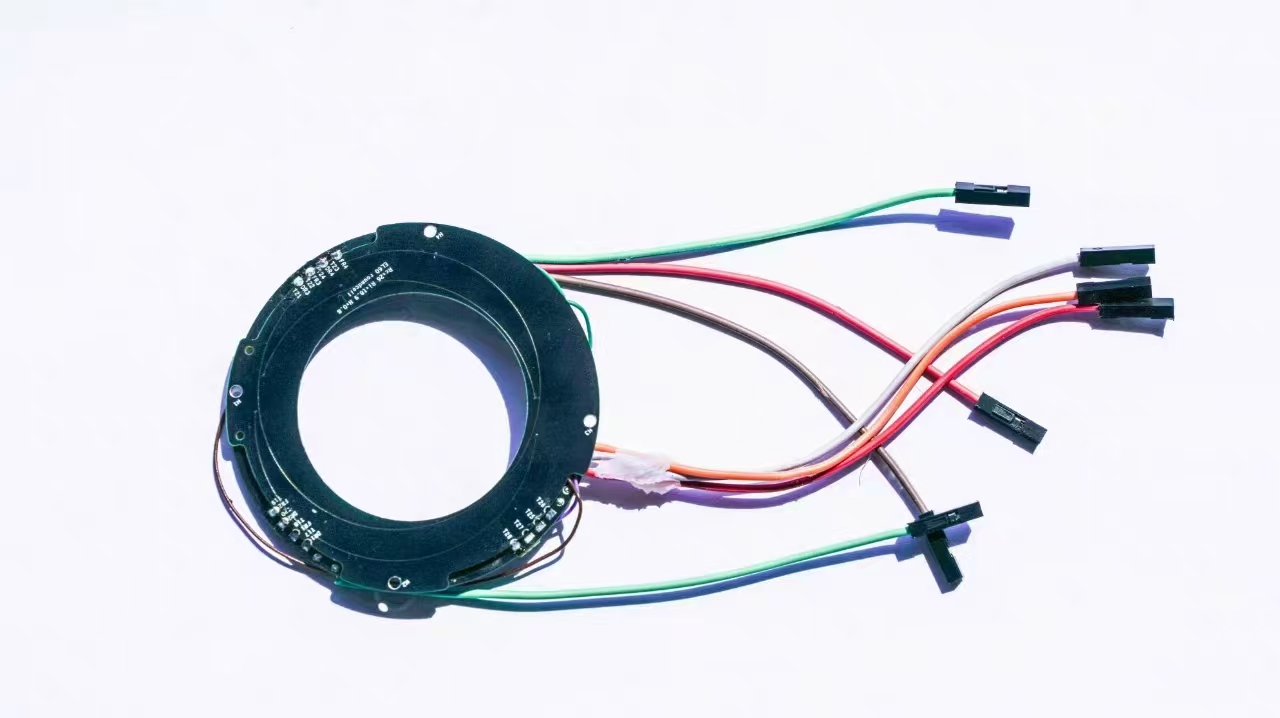
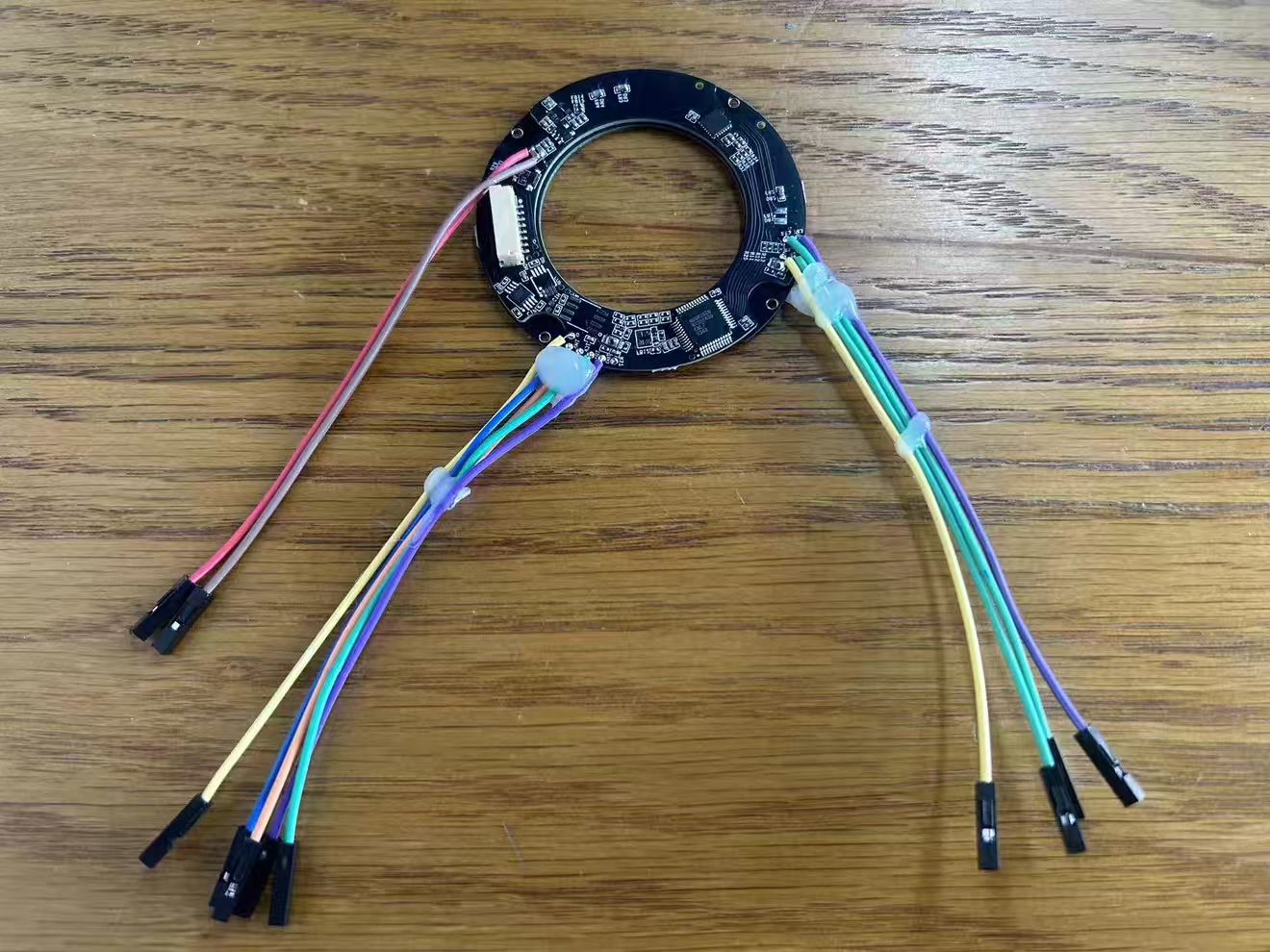
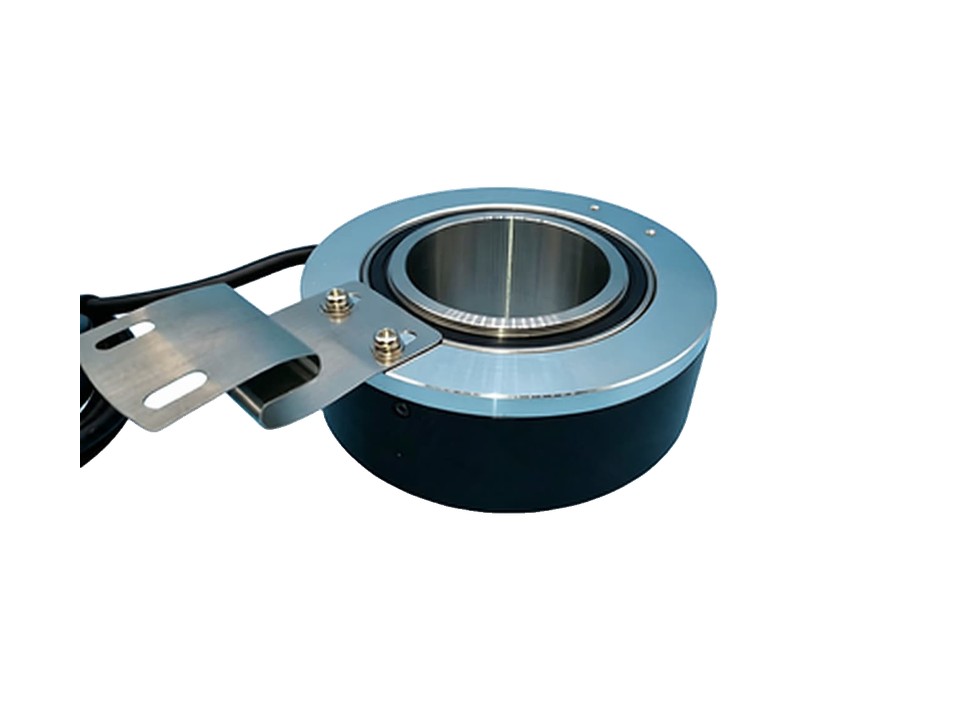
| Product model | RM10 |
| Core chip | AFEA1001 self-developed inductive sensing SoC |
| Sensing principle | Inductive (eddy-current coupling) |
| Output | Absolute — position retained on power loss, no homing required |
| Sensing accuracy | 0.001° |
| Overspeed alarm | Supported, threshold configurable |
| Calibration | One-key, tool-free — rotate the rotor one full revolution under power and the zero point is captured automatically |
| Maximum speed | 10,000 RPM |
| Communication protocols | RS485 / BISS-C / SSI |
| Communication frequency | ≤ 16 kHz |
| Supply voltage | 2.5 V – 5.5 V |
| Working current | 15 mA typical |
| Operating temperature | −40 °C to +85 °C |
| Protection rating | IP67 (optional enhanced coating) |
| ESD protection | IEC 61000-4-2, ±12 kV |
| Vibration | 10–55 Hz, 1.5 mm amplitude; 55–2000 Hz, 98 m/s² · XYZ, 2 h each |
| Mechanical shock | 980 m/s², 11 ms, 3 times per direction |
| Insulation resistance | 50 MΩ |
| Low-power modes | Sleep < 25 µA · Deep Sleep < 2 µA |
Notes: Sensing accuracy (0.001°) is finer than the 17-bit single-turn output step (0.00274°/LSB): the measurement principle is not the limiting factor — the output protocol quantizes the measured angle to 0.00274° steps. Higher bit-width output is available on request. ≤ 16 kHz is the serial communication update rate; maximum speed is a mechanical rating — the two parameters are independent.
Three protocols, one 8-pin terminal
The RM series uses a shared 8-pin terminal definition across all three protocols, simplifying your cable design and inventory.
| Pin | Signal |
|---|---|
| 1 | 5V VDD |
| 2 | GND |
| 3 | NC |
| 4 | NC |
| 5 | 485+ |
| 6 | 485− |
| 7 | NC |
| 8 | NC |
Best for: servo drives already using Tamagawa-compatible RS485 absolute encoders. Broad ecosystem compatibility and proven reliability.
| Pin | Signal |
|---|---|
| 1 | VDD |
| 2 | GND |
| 3 | DATA+ |
| 4 | DATA− |
| 5 | CLK+ |
| 6 | CLK− |
| 7 | NC |
| 8 | NC |
Best for: high-dynamic servo and robot applications requiring high-speed bidirectional communication with real-time CRC-protected data.
| Pin | Signal |
|---|---|
| 1 | VDD |
| 2 | GND |
| 3 | DATA+ |
| 4 | DATA− |
| 5 | CLK+ |
| 6 | CLK− |
| 7 | NC |
| 8 | NC |
Best for: general industrial applications needing a simple, robust, low-cost synchronous interface.
Where the RM10 earns its place
Robot joints
Humanoid and industrial robot joints with dense motor-gearbox electromagnetic environments. 54+ units per humanoid.
Servo motors
Direct replacement in Tamagawa-protocol servo systems; BISS-C for next-generation high-dynamic drives.
Rotary tables & spindles
Machine-tool spindles and indexing tables needing high speed, high accuracy and long service life.
Smart meters & flow meters
Battery-powered, magnetic-free rotation sensing with average system power below 10 µA.
New energy equipment
Solar trackers and wind pitch systems operating outdoors across a −40 to +85 °C range.
Automation lines
Indexing, cam and pick-and-place systems where downtime from sensor failure is unacceptable.
RM10 rotary encoder: questions buyers ask
Direct answers for engineers evaluating an absolute inductive encoder.
What is the RM10 encoder?
The RM10 is an absolute inductive rotary encoder with 0.001° sensing accuracy and up to 10,000 RPM, built on our own AFEA1001 inductive sensing IC. No glass disk, no LED.
How accurate is the RM10?
Sensing accuracy is 0.001° with absolute output — position is known immediately at power-up, no homing routine required.
Which communication protocols does it support?
RS485, BISS-C and SSI on one shared 8-pin terminal definition, which simplifies cable design and inventory while keeping all three interface options available.
Is the RM10 protected against dust and water?
Yes — IP67 rated (optional enhanced coating), operating from −40 °C to +85 °C with ±12 kV ESD protection, and 100% factory tested.
Can it replace an existing optical encoder?
Drop-in compatible. Inductive sensing removes the glass disk, LED aging and contamination failure modes that cause most optical encoder field returns.
How much power does it draw?
≤15 mA at 2.5–5.5 V supply, which makes it suitable for battery-powered meters and low-power portable equipment.
Qualify the RM10 on your bench
Sample units, evaluation boards, protocol documentation and engineering support — start your qualification this week.